Why the Room Itself Is a Performer: The Science and Soul of Venue Acoustics
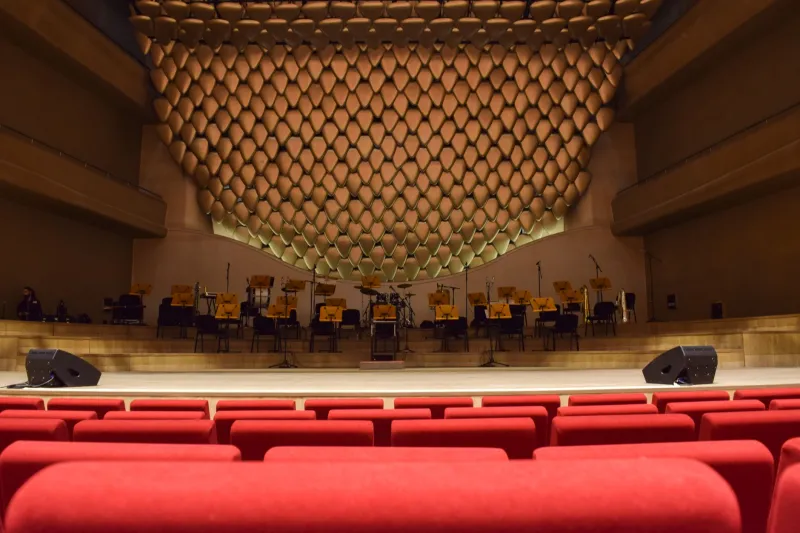
You've probably had both experiences. The first: you're standing in some mid-size venue, the band kicks in, and the sound wraps around you like a warm hand on the shoulder. Every note lands. The bass sits in your chest. You forget you're standing on a sticky floor next to a stranger. The second: a different night, different room, and something's just... off. The music sounds like it's coming from a television in the next apartment. You can't quite figure out why, but the magic isn't there.
The band might be the same. The PA system might even be better. But the room changed everything.
That's not a coincidence. It's physics. And it's something that sound engineers, acoustic architects, and performers think about constantly — even when audiences never do.
What Makes a Room "Alive"
At its most basic, acoustics is about how sound waves behave once they leave their source. They travel, they bounce, they absorb, they collide with each other. Every surface in a room — the walls, the ceiling, the floor, the seats, the bodies filling those seats — either reflects sound back into the space or soaks it up.
The ratio of reflection to absorption determines what acousticians call reverberation time: how long a sound lingers after it's produced. A cathedral might hold a note for six, seven, even ten seconds. A recording studio's isolation booth might kill it in under half a second. Neither extreme works great for a live rock show. The sweet spot depends entirely on what's being performed.
"Orchestral music loves a long reverb tail — it fills out the harmonics and gives the sound this lush, layered quality," says Marcus Webb, a live sound engineer based in Nashville who's mixed everything from Broadway touring productions to stadium country shows. "But if you put a hip-hop act in that same hall without treating it, the lyrics turn into soup. Every genre has its own acoustic needs, and not every room was built with that in mind."
The Quirks That Become Legends
Some of the most beloved venues in American entertainment history are famous precisely because of their acoustic oddities. The Ryman Auditorium in Nashville — originally built as a tabernacle in 1892 — has a reverb that performers describe as almost supernatural. The wooden pews, the curved balcony, the old plaster walls: they all conspire to create a bloom around the sound that modern venues spend millions trying to replicate artificially.
Then there's Radio City Music Hall in New York, which underwent a massive acoustic renovation in the 1990s after decades of complaints that the upper balcony was essentially a dead zone. Sound would arrive late, diffused, stripped of its punch. For a venue that seats nearly 6,000 people, that's not a small problem.
"Dead zones are the enemy," says Priya Nambiar, an architectural acoustics consultant who has worked on venue renovations across the country. "They happen when reflections from different surfaces cancel each other out at specific frequencies. You end up with a seat where the bass completely disappears, or where vocals sound thin and distant. It's not that the sound isn't reaching that spot — it's that the wrong version of it is."
Those cancellations are called acoustic nulls, and they're invisible, which makes them maddening to diagnose without specialized equipment. Audience members in those seats often don't know why they feel shortchanged. They just know the show didn't quite hit.
What Performers Actually Feel
Ask any experienced performer about rooms, and you'll get an almost spiritual response. They talk about venues the way golfers talk about courses — with reverence, with specific memories, with opinions that run deep.
There's a reason certain artists make a point of performing at specific venues year after year. It's not just nostalgia. When a room's natural reverb complements a singer's voice, they can hear themselves more clearly in the monitors, they can modulate their performance instinctively, and they take risks they wouldn't take in a dead room. The space becomes a collaborator.
"I've played rooms where I felt like I could do anything," says one touring vocalist who asked to remain anonymous so she could speak candidly. "The sound just holds. You sustain a note and the room sustains it with you. And then I've played rooms where I felt like I was screaming into a pillow. Same songs, same band. The room just took everything and buried it."
The psychological dimension is real and measurable. Studies in performance psychology have shown that when musicians can hear themselves and their bandmates clearly — what engineers call a good monitor mix — they play with greater confidence, make fewer errors, and connect more emotionally with what they're doing. A hostile acoustic environment isn't just uncomfortable. It degrades the actual performance.
The New Venues Trying to Get It Right
Modern venue design has gotten remarkably sophisticated. Architects now use 3D acoustic modeling software to simulate how sound will behave in a space before a single wall goes up. Variable acoustic systems — motorized panels that can be deployed or retracted depending on the event — allow a single venue to function well for a symphony one night and a comedian the next.
The Moody Center at the University of Texas in Austin, which opened in 2022, was designed with exactly this kind of flexibility in mind. Its hanging acoustic baffles and adjustable ceiling elements let the venue tune itself to different configurations. It's a far cry from the old approach of building a room, hearing what it sounds like, and then hoping for the best.
But technology can only go so far. "You can fix a lot with DSP and delay stacks," says Webb, referring to the digital signal processing tools that engineers use to compensate for acoustic problems in real time. "But you can't fully manufacture the feeling of a great room. The best technology does is get out of the way. It's the room that has to do the work."
Why It Matters More Than We Think
Most concertgoers will never consciously think about any of this. They'll just know whether a show felt incredible or strangely flat, and they'll attribute it entirely to the performers. Which is understandable — and also a little unfair to everyone involved.
The room is always performing alongside the artist. The walls are vibrating. The ceiling is shaping the sound. The floor is conducting bass frequencies up through your feet before your ears even register them. When it all works together, that's not an accident. It's the result of careful design, thoughtful engineering, and sometimes just the happy accident of a 130-year-old building that nobody fully understood until someone great stepped onto its stage.
Next time a show hits you somewhere deep and you can't quite explain why, look up. Look around. The room might be the one taking a bow.