The Unspoken Conversation: What Performers Know About Reading a Room That You Don't
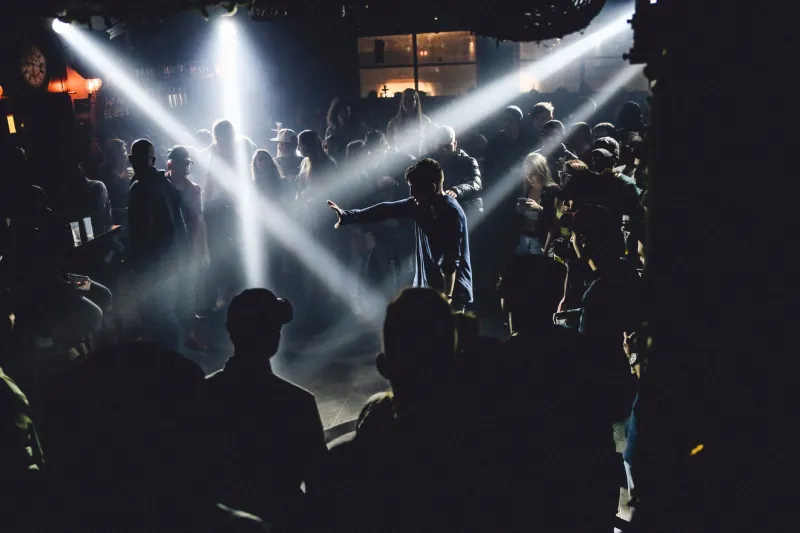
There's a moment that seasoned performers talk about almost reverently — that split second when the room "locks in." The air changes. The energy shifts. Something clicks between the person holding the mic and the thousands of people staring back at them, and suddenly it doesn't feel like a performance anymore. It feels like a conversation.
But here's what most audience members never realize: that conversation has been going on since the moment the lights went down.
It's Not Magic — It's a Skill
Ask any working performer what separates a transcendent night from a flat one, and almost none of them will point to the setlist, the lighting rig, or the sound system. They'll point to the audience.
"I've played the same song a thousand times," says one indie rock musician who regularly tours mid-sized venues across the US. "But every single night, that song is different. Because the people listening to it are different. I'm always adjusting — tempo, dynamics, how long I hold a note — based on what I'm feeling back from the crowd."
This isn't just poetic talk. Performers develop a remarkably specific set of perceptual skills over time. They're scanning for physical cues — swaying bodies, crossed arms, people checking phones, the particular quality of silence that means "we're hanging on every word" versus the silence that means "we're bored and polite." They're listening for the texture of crowd noise: the difference between a buzz of anticipation and a restless murmur. They're even, according to some, picking up on the collective temperature of a room in a way that's hard to articulate but impossible to ignore.
"Comedy is the most brutal version of this," says a stand-up comic who's performed everywhere from tiny Chicago clubs to sold-out theaters. "There is nowhere to hide. If you're not reading the room, you're dying on stage. And you feel it in real time. A joke that crushed on Tuesday can land completely differently on a Friday night crowd that came in already half-drunk and rowdy. You have to recalibrate on the fly."
The Body Knows Before the Brain Does
What's fascinating — and what sports psychologists and performance researchers have started to study more seriously — is how much of this reading happens below conscious thought. Performers often describe making adjustments they can only explain after the fact.
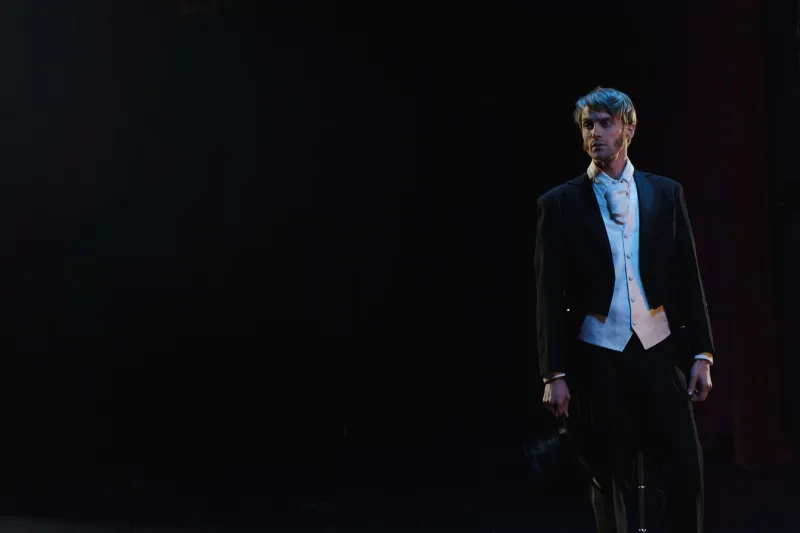
A Broadway actor who's spent years in long-running productions describes it this way: "You walk out on that stage and within the first thirty seconds you just know. Is this a Wednesday matinee crowd that needs warming up? Is this a Saturday night audience that's already electric? Your body picks it up before your brain can name it. And then you start making choices — you slow down, you lean in, you give them a little more room to breathe — all without consciously deciding to."
Neuroscientists have a name for part of what's happening here: mirror neuron activation. When we watch someone perform, our brains simulate the physical and emotional experience of doing it ourselves. The audience is, in a very real sense, performing alongside the person on stage. And the performer — tuned in and experienced — can feel that collective simulation radiating back at them.
This is why the same comedian can absolutely destroy at one show and struggle through another. It's not just confidence or preparation. It's the chemistry of that specific crowd on that specific night, and whether the performer can tap into it.
The Tools of the Trade
So how do performers actually do it? We asked around, and a few techniques came up repeatedly.
Eye contact as radar. Even in a venue with a thousand people, skilled performers make sustained eye contact with specific individuals throughout the crowd — not to single anyone out, but to use those micro-expressions as a sample of the room's overall temperature. A smile, a furrowed brow, a nod — these become data points.
Silence as signal. Counterintuitively, silence is one of the most informative things a crowd can give you. But it has to be read correctly. A concert hall holding its breath during a quiet passage is giving you gold. That same silence during a moment that was supposed to pop? That's an alarm bell.
Pacing as a dial. Many performers describe consciously slowing down or speeding up their rhythm based on crowd energy. A sluggish room might need to be pulled forward with intensity. An already-amped crowd might need a performer to ease back and let the energy breathe, or risk burning it all out too early.
The first three rows. Multiple performers mentioned this one. The people closest to the stage tend to be the most engaged, and their energy — or lack of it — often sets the tone for the whole room. "If I can get the front rows," one musician told us, "the rest of the room usually follows."
When It All Comes Together
The moments fans remember for decades — the impromptu singalongs, the comedian who went off-script and the whole room lost it, the actor who found something new in a role they'd played hundreds of times — almost always trace back to this feedback loop firing on all cylinders.
It's a performer who noticed something, trusted their instincts, made a choice, and got it right. And an audience that was present enough, open enough, and locked in enough to make that choice land.
"The best shows feel like something that happened to both of us," says one veteran touring musician. "Not something I did for them. There's a difference, and audiences feel it even if they can't name it."
That's the thing about the invisible conversation between performer and crowd. Neither side fully controls it. Both sides create it together. And when it works — when the room locks in and the air shifts and something clicks — that's the whole reason live performance exists in the first place.
No algorithm can replicate it. No streaming service can bottle it. It only happens when real people show up in the same room and decide, together, to be present.
And that's exactly what makes it worth every ticket price.