Painting with Light: The Hidden Art Form Running Every Great Show You've Ever Seen
Think about the last time a performance genuinely moved you. Maybe it was a Broadway musical, a stadium concert, or even a local theater production that punched way above its weight. You probably walked out talking about the performances, the music, the choreography. But there's a solid chance something else was quietly doing heavy lifting the entire time — and you never even noticed it.
That's exactly how great lighting design is supposed to work.
The Invisible Storyteller in the Room
Lighting designers occupy one of the most fascinating and underappreciated roles in all of live entertainment. They're not just flipping switches and pointing beams at performers. They're making decisions about how you feel at any given second — whether you realize it or not.
"Light is the first thing your eye processes before your brain catches up," says Tony Award-winning lighting designer Jules Fisher, whose credits span decades of landmark Broadway productions. "By the time you consciously register that something emotional is happening onstage, the light has already told you how to feel."
That's a remarkable amount of power concentrated in something most audiences never consciously register. And it's exactly what makes the craft so endlessly compelling.
Color Does the Emotional Heavy Lifting
If you've ever sat in a theater and felt inexplicably uneasy during a scene, or found yourself leaning forward with anticipation during a moment that hadn't quite started yet, color temperature probably had a lot to do with it.
Cool blues and greens create psychological distance — they signal isolation, grief, or something clinical and cold. Warm ambers and golds pull audiences in, suggesting intimacy, nostalgia, or comfort. Deep reds and purples carry weight, often associated with danger, passion, or something larger than life.
But the really sophisticated stuff happens in the transitions. The way a wash of light shifts almost imperceptibly from warm to cool during a character's emotional breakdown — that's not accidental. That's someone spending months in a design studio making deliberate choices about your nervous system.
Holiday concerts lean into this brilliantly. Think about the last major arena Christmas show you attended. The way the lighting moved from a bright, energetic wash during uptempo numbers to a single soft amber spot during a quiet holiday ballad wasn't a coincidence. Someone spent weeks programming that shift to hit you right in the chest.
What a Single Spotlight Actually Says
The solo spotlight is one of the oldest tricks in the theatrical playbook, and it still hits every single time. There's a reason for that.
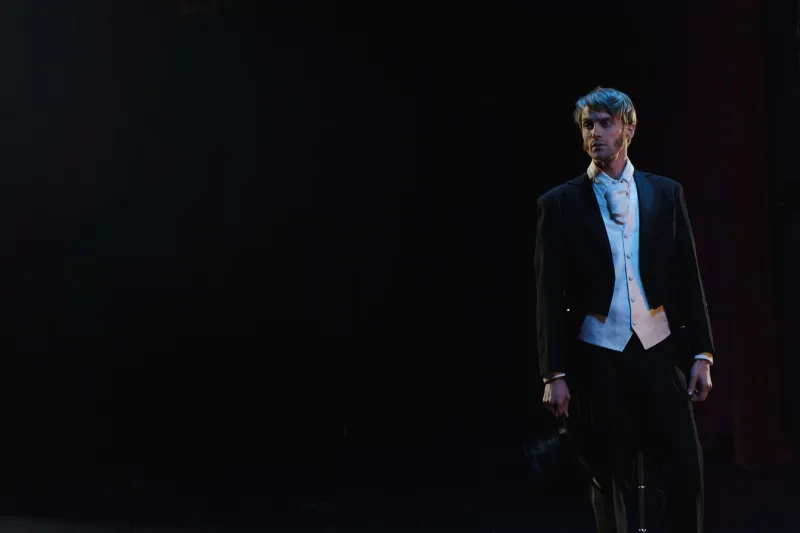
When a lighting designer narrows the world down to one beam focused on one person, they're doing something psychologically powerful. They're telling the audience: this is what matters right now. Everything else disappears. The darkness surrounding that performer isn't empty — it's loaded. It creates intimacy in a room with thousands of people. It makes a 5,000-seat venue feel like a private conversation.
Look at iconic concert moments — Bruce Springsteen stepping into a single white spot at the start of a stripped-down acoustic set, or Adele bathed in soft warm light during a ballad that reduces an arena full of people to collective tears. The lighting isn't accompanying those moments. It's creating them.
Broadway has its own legendary examples. The final moments of Defying Gravity in Wicked, where Elphaba rises into the fly space while the lighting shifts from the warm greens of Oz into something vast and blue-white, essentially rewrites the emotional stakes of the entire show in about 90 seconds. The set and the performance are extraordinary — but the light is what makes it feel mythic.
Movement, Rhythm, and the Concert Experience
In theatrical settings, lighting tends to move slowly and deliberately, mirroring the pace of drama. In concert production, the rules change entirely.
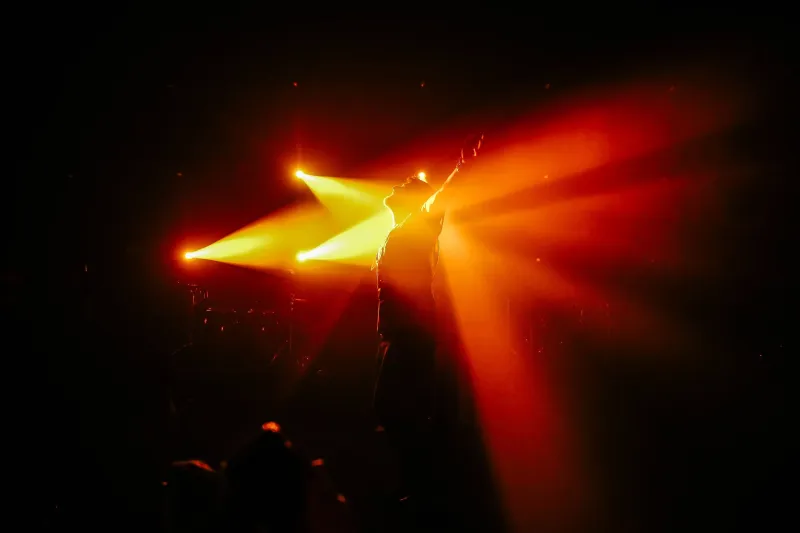
Modern concert lighting rigs are staggering in their complexity. A major touring production might involve hundreds of automated fixtures, laser systems, LED panels, and strobes, all programmed to move in sync with the music's rhythm and emotional arc. The lighting becomes a visual instrument — a percussion section you experience with your eyes.
Lighting directors at major tours spend months programming cues to the millisecond. A strobe hit that lands exactly on a snare crack. A slow color sweep that builds across the chorus. A sudden blackout that makes an entire stadium gasp before a key change drops. These are compositional decisions as precise as anything happening in the band.
"People think live concert lighting is spontaneous," says one production designer who's worked with major touring acts across the US. "Some of it is. But the foundation is incredibly deliberate. We know emotionally where the audience should be at every moment of that show, and we're engineering toward that."
The Design Process Most People Never See
For a major Broadway production or a large-scale live event, the lighting design process starts long before rehearsals. Designers read scripts, study character arcs, attend early workshops, and build detailed paperwork — light plots, cue sheets, focus charts — that map out every fixture in a rig and its intended purpose.
The collaboration between a lighting designer and a director is intimate and sometimes contentious. What a director sees in their imagination doesn't always translate directly to what's technically achievable, and a good lighting designer knows how to bridge that gap creatively rather than just technically.
Then come the tech rehearsals — those long, grinding sessions where the lighting team works through every single cue while the cast stands onstage in street clothes. It's unglamorous work. But it's where the magic actually gets built.
Why You Should Start Actually Noticing It
Here's a small challenge: the next time you're at a live performance — whether it's a Broadway touring production stopping in your city, a concert at your local arena, or even a community theater show — spend the first five minutes just watching the light.
Notice where it falls and where it doesn't. Pay attention to how it changes when the emotional tone of a scene shifts. Watch what happens to your own feelings when the lighting designer makes a bold choice.
You'll start to realize that the performance you've been watching all these years has actually been two performances happening simultaneously. One is what the artists are doing. The other is what the light is saying about it.
And once you see it, you really can't unsee it.
The stage is a collaborative canvas, and the lighting designer is one of its most essential — and most invisible — artists. Next time a performance moves you in a way you can't quite put into words, there's a decent chance someone in a dark booth at the back of the house just told you something without saying a single word.