You Need Them, They Need You: The Silent Deal at the Heart of Every Great Show
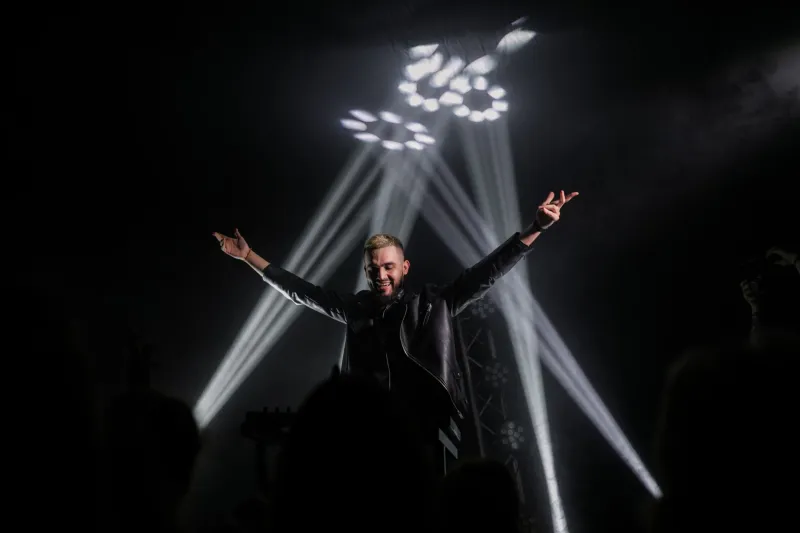
Before a single note gets played or a curtain rises, something invisible is already happening. The performer backstage is running through their ritual—breathing, stretching, maybe staring at a wall. The audience is settling into seats, silencing phones (hopefully), and shifting from the outside world into something more open. Neither side is announcing what they're about to do. But both are entering into a deal.
Call it the invisible contract of live performance. No one signs it. No one reads the fine print. But everyone in that room knows, on some level, that it exists—and they know when someone breaks it.
What the Contract Actually Says
On the performer's side, the agreement is pretty clear: show up fully. Not just physically, but emotionally. Give the audience something real, something that couldn't have been recorded six months ago and uploaded to a streaming platform. Risk something. That's the whole point of being there in person.
On the audience's side, the deal is a little harder to pin down—but it's just as binding. It means presence. Not passive consumption, but active engagement. Laughter when something's funny. Silence when silence is earned. The willingness to be moved, even when that's uncomfortable.
Psychologists who study performance dynamics have a term for this: co-creation. The idea is that a live show isn't something that happens to an audience—it's something an audience participates in making. The energy in the room shapes what a performer does. Their response reshapes the energy. It's a feedback loop that can either spiral into something transcendent or quietly collapse into awkwardness.
How Streaming Changed the Equation
Here's where things get complicated. The streaming era didn't kill live performance, but it absolutely rewired how both performers and audiences think about it.
For audiences, the shift is subtle but significant. When you can pause, rewind, and watch anything on demand, sitting still for two hours in a theater or arena starts to feel like a different kind of commitment. Some people show up to live events carrying streaming-brain—the reflex to pull out a phone, to document rather than experience, to treat the performance as content rather than encounter.
For performers, the pressure is equally strange. Many artists now release music, comedy specials, or filmed performances digitally before touring. Which means the audience sometimes knows every word, every beat, every punchline before they walk through the door. The element of discovery—one of the original thrills of live performance—has to be manufactured in new ways.
Broadway has felt this tension hard. Productions that lean into the live-only experience, offering moments of improvisation or genuine unpredictability, tend to generate a different kind of word-of-mouth than those that feel like faithful reproductions of what you could already watch online. The ones that survive aren't necessarily the biggest spectacles. They're the ones that remind you, viscerally, why you got off the couch.
When the Contract Gets Honored
Some of the most talked-about live moments of the past decade happened precisely because both sides showed up completely.
Think about Beyoncé's Coachella headlining set in 2018—later released as Homecoming on Netflix. Yes, it was eventually streamed by millions. But the people in that desert on those two April nights weren't watching a concert. They were participating in a cultural event that drew its power from collective presence. The crowd wasn't background noise. They were part of the performance. And Beyoncé, for her part, gave a show that was clearly built for that specific, unrepeatable moment. The contract was honored on both sides, and the result became a landmark.
Or consider a smaller example: stand-up comedy. The best live comedy sets work because of the room. A joke that kills in a packed club in Chicago lands differently on a recorded special—sometimes better, sometimes worse, but always differently. Comedians like Dave Chappelle, Nikki Glaser, and Wanda Sykes have all talked about how the audience's willingness to go somewhere uncomfortable with them is what makes the whole thing work. Pull back that trust, and the joke doesn't just fall flat—it dies in a way that a streaming recording simply can't replicate.
When It Falls Apart
Of course, the contract breaks down too. And when it does, everyone in the room feels it.
There's a particular kind of silence that falls over a theater when a performer is clearly going through the motions—when they're technically hitting every mark but emotionally somewhere else entirely. Audiences pick up on it instantly, even if they can't articulate why. The energy in the room drops. People start checking their phones. The show becomes a transaction rather than an experience.
But audiences break the contract too. Constant phone-filming, talking during quiet scenes, treating a live performance like a backdrop for social media content—these aren't just rude. They actively drain the room of the energy that makes live performance worth doing. Multiple performers, from Phoebe Bridgers to actors in off-Broadway productions, have stopped shows mid-performance to address this directly. Not because they're divas, but because the contract was being violated in real time.
Why It Matters More Right Now
Live performance is at a crossroads. Ticket prices are high. Competition for attention is brutal. A generation of potential audience members grew up consuming entertainment almost entirely through screens. The case for showing up in person—and really showing up—has never needed to be made more urgently.
But here's the thing: that urgency is also an opportunity. Because when the contract is honored, when a performer and an audience both bring their full selves to the same room at the same time, what happens can't be replicated anywhere else. Not on Netflix. Not on Spotify. Not in a highlight reel on TikTok.
That's the whole point. That's always been the whole point.
The invisible contract isn't a burden. It's an invitation. And right now, more than ever, both sides need to say yes.