Likes, Shares, and Sold-Out Floors: How Social Media Rewrote the Rules of Live Entertainment
Not long ago, the path to a packed house ran through radio stations, print ads, and the goodwill of local press. A promoter bought some spots, plastered some posters, and hoped the right people showed up. That world didn't just evolve — it got completely flipped on its head. Today, the most powerful marketing tool for a live show isn't a media buy. It's a teenager with a phone and good timing.
Welcome to the new live entertainment economy, where the algorithm decides who blows up and a single viral clip can leapfrog years of traditional hustle.
The Clip That Starts Everything
Ask any independent promoter working the mid-size venue circuit right now and they'll tell you the same thing: the first question they ask about any new act isn't about catalog or touring history. It's about socials.
"We look at TikTok engagement before we look at streaming numbers," says one Chicago-based promoter who books a 1,500-capacity room. "Streams tell me people listened once. A video with 800,000 views and a comment section full of 'WHERE ARE THEY TOURING' — that tells me there's real demand waiting to be converted."
That conversion is the whole game now. Social media doesn't just create buzz; it creates intent. When a clip of an artist's live performance hits the For You page and the comment section explodes with people tagging their friends, that's not just engagement. That's a pre-sale waiting to happen.
TikTok in particular has rewritten how quickly an unknown act can go from nobody to sellout. Artists like Zach Bryan, Reneé Rapp, and Chappell Roan all benefited from organic platform momentum before their ticket sales caught fire. The fans found them on a screen and then desperately wanted to find them on a stage.
Venue Owners Are Playing a Different Game Now
For the people actually running performance spaces, social media has created both enormous opportunity and a kind of whiplash that's hard to manage.
"We had an artist come through last spring who had maybe 40,000 Instagram followers," recalls the general manager of a mid-size theater in Nashville. "Not huge numbers. But one of their live clips had gone crazy on TikTok a few weeks earlier, and suddenly we're fielding calls about ticket availability for a show we hadn't even finished promoting. We sold out in 36 hours."
That's the dream scenario. But venue operators also describe the flip side — acts with enormous follower counts that simply don't translate to ticket buyers. Social clout and genuine fan loyalty aren't the same thing, and the industry is still learning to tell the difference.
The smart venues have started building their own social infrastructure, not just relying on artists to drive traffic. Short-form content showing off the space, behind-the-scenes production footage, even just well-shot clips of crowd energy — all of it feeds an ecosystem that keeps a venue top of mind when fans are deciding where to spend their Friday night.
The Pressure on Performers Is Real
Here's the part that doesn't always make the highlight reel: the psychological weight that comes with performing in the social media era is significant.
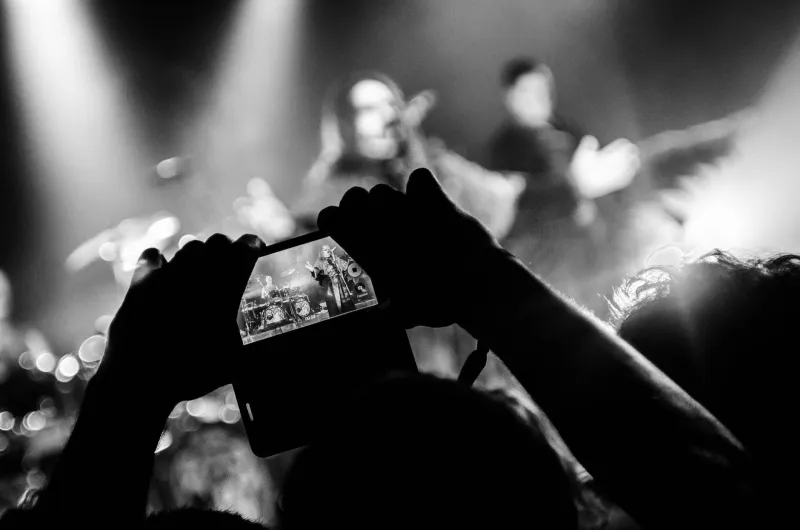
Emerging artists aren't just preparing for a show anymore. They're preparing for the moment inside the show that someone will capture and post. Every performance now carries the potential for a clip that either rockets them forward or — in the worst case — becomes the wrong kind of viral.
"I think about it constantly," admits one Brooklyn-based singer-songwriter who has been building a following over the past two years. "Not in a paranoid way, but you're aware that the room is full of cameras. You want to give people a moment worth sharing. That's actually pushed me to take more risks on stage, try things that feel big and real. Because safe doesn't go viral."
That pressure has changed the shape of live shows in subtle but real ways. Performers are building in more visually dramatic moments, leaning harder into audience interaction, and thinking cinematically about staging — even in small rooms. The show is being designed for two audiences simultaneously: the people in the room and the people who will watch the clip later.
Democratization With an Asterisk
One of the genuinely exciting things about the social media era is how it's leveled certain playing fields. An artist without label backing or industry connections can build a fanbase that demands live dates, creates their own touring market, and fills rooms on their own terms. That's real, and it's changed lives.
But it's not a perfectly level field. The algorithm favors consistency, production quality, and — let's be honest — a certain kind of visual appeal. Artists who don't fit the aesthetic norms that platforms tend to amplify can still get lost in the noise, even with genuine talent. And the grind of content creation on top of actually making music and performing is exhausting in ways that don't always get acknowledged.
"I'm a performer, not a content creator," says one touring musician who asked to remain unnamed. "But the industry treats them like the same thing now. If you're not posting three times a week, you're invisible. That's a whole second job on top of the actual job."
The promoters who are paying attention to this are starting to offer more support — some larger agencies now have social strategy teams specifically working with touring artists. But for independent acts, it's still largely a solo climb.
What Comes After the Viral Moment
Going viral is the beginning of a conversation, not the end of one. The artists and shows that have figured this out are the ones turning platform momentum into sustained live careers.
The key seems to be authenticity — a word that gets thrown around a lot but means something specific here. Audiences who discover a performer through a 15-second clip are making a quick emotional bet. When they show up to the actual show and it delivers something real, something that can't be compressed into a clip, that's when a fan is made for life.
The shows that AOM Show covers week in and week out? The ones that keep coming up in conversation, that people drive hours to see, that sell out before the announcement even fully lands? Almost every single one of them has a social media story underneath it. A clip that caught fire. A moment that made someone stop scrolling and start searching for tickets.
The hype machine is real. But what it's pointing toward — that electric, irreplaceable thing that happens when a performer and a crowd are in the same room — that part hasn't changed at all.