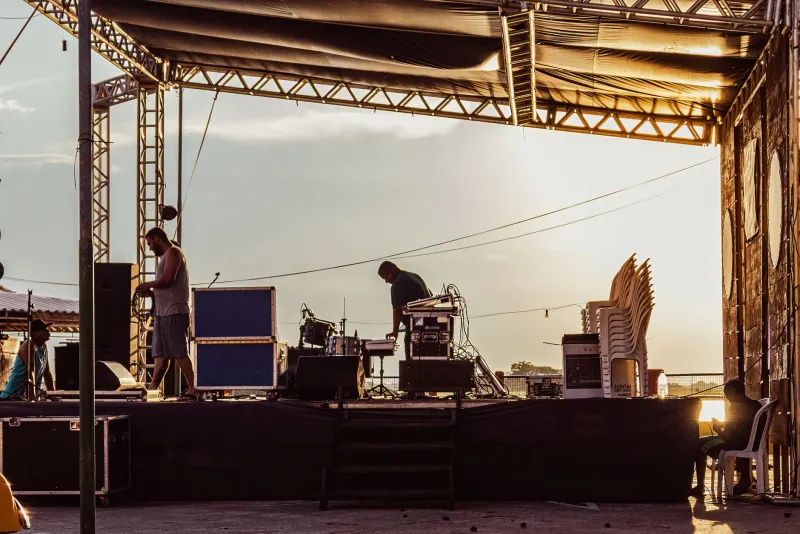
Fifteen Minutes to Win a Room: The Art of the Opening Set

Photo by Photo by Nainoa Shizuru on Unsplash on Unsplash
It's 7:42 p.m. at a 1,200-capacity club, and the room is still half full. The headliner's gear sits under a sheet, the bartenders are moving fast, and a few hundred people are staring at their phones. This is the opening act's reality: you have roughly twenty minutes to convince a crowd that came for somebody else to stop scrolling and start listening.
It's easy to call that a warm-up. It isn't. The opening set is a compressed test of craft, nerve, and emotional intelligence. The artists and tour managers who live in that slot describe it less like a concert and more like a first date conducted under stage lights.
The Cold Room Is the Real Opponent
Every opener faces the same math. The audience didn't buy a ticket for you. They may not know your name, your songs, or even your genre. Some are still finding their seats; others are arguing about parking. A headliner can ride a wave of anticipation. An opener has to build one from scratch.
That's why experienced openers treat the first minute like a handshake. They don't open with the slowest song or the deepest cut. They open with a signal: here's who we are, here's the energy, and here's why you should stay. A sharp hook, a clear groove, or a confident hello can do more than a five-minute intro.
Pick Songs Like You're Building a Bridge
The setlist is the real strategy. A headliner can play for the faithful. An opener has to sequence for strangers. Tour managers often talk about building a bridge: start with something immediate, slip in the song that shows range, and save the biggest moment for the back half of the set.
That doesn't mean playing your most obvious song first. It means reading the room. A crowd that's still filing in may need energy. A crowd that's already packed in may need a reason to trust you. The trick is to leave one clear memory behind - a chorus, a riff, a moment of honesty - so people walk away saying, I need to look that act up.
Banter Without Begging
Stage banter is where opening acts either connect or crash. The worst version is a sales pitch: buy the merch, follow us, stream the record, please clap. The best version sounds like a person, not a commercial. A quick story about the tour, a genuine thank-you, or a self-aware joke about being the opening act can lower the room's guard.
But there's a line between charm and neediness. Audiences can feel when an artist is auditioning for approval. The openers who win rooms tend to be generous: they praise the headliner, they acknowledge the crowd's patience, and they get back to the music. They don't beg for attention. They earn it in small increments.
The Career Math of a Good Opening Set
The opening slot is brutal because the stakes are invisible. A great set might not show up in ticket sales that night. But it can change the trajectory of a career. Opening runs are where young acts learn how to hold a room, how to travel, how to handle a half-interested crowd, and how to make friends with the crew. They're also where future fans are minted, one curious listener at a time.
That's why so many artists treat an opening gig like a headline show in miniature. They rehearse the transitions, tighten the set, and plan the final bow. They know a room that came in cold can leave warm. And they know the person in the third row who just discovered them might be the one buying a ticket to their own tour two years from now.
What the Crowd Remembers
By the time the headliner takes the stage, the opener's job is done - or not. The crowd may remember a song, a joke, a voice, or just a feeling that the night started better than expected. That's the quiet miracle of the opening set. It doesn't need to win everyone. It just needs to turn a few strangers into believers before the lights go down.