Small Rooms, Big Feelings: Why Intimate Venues Are Becoming the Hottest Ticket in Live Entertainment
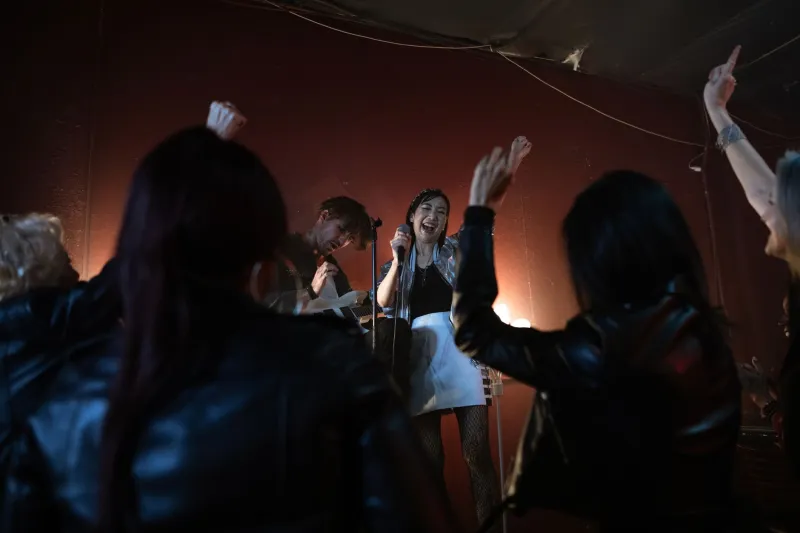
There's a certain kind of magic that happens when a performer is close enough that you can see them sweat. Not metaphorically — literally. When the room is small, the stakes feel higher, the silences land harder, and the applause means something different. It bounces off actual walls instead of disappearing into a raftered void.
Across the US, that kind of magic is becoming a serious business. Audiences are increasingly seeking out performances in converted warehouses, backyard amphitheaters, basement jazz clubs, art gallery pop-ups, and even private homes — and they're willing to pay a premium to be there. The era of the intimate show isn't just a niche aesthetic preference anymore. It's reshaping how performers think about their work and how fans think about what a night out is actually worth.
The Spectacle Fatigue Is Real
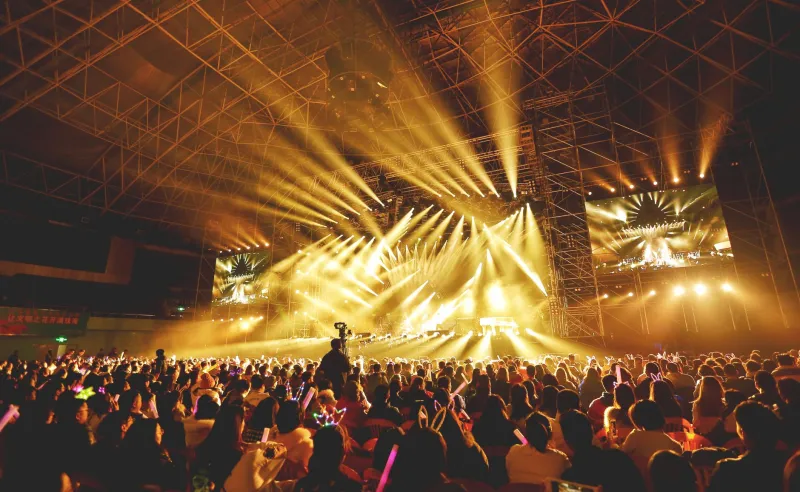
For years, the entertainment industry chased scale. Bigger stages. More pyrotechnics. Longer world tours with higher production budgets. And look — there's still a huge audience for that. A Beyoncé stadium run isn't going anywhere.
But something started shifting post-pandemic. After years of isolation, audiences didn't just want to be in a room with a performer again. They wanted to feel something real. They wanted eye contact. They wanted the version of the show that couldn't be streamed, clipped, or replicated on a screen. And increasingly, that version lives in a 75-seat black box theater or a ticketed concert series held in a Williamsburg loft.
Call it spectacle fatigue. After being marketed to with increasingly larger and louder productions, a growing segment of the entertainment-going public started craving the opposite. Smaller. Stranger. More personal.
Exclusivity as an Experience
Here's the thing about intimate shows: the limited capacity isn't a bug, it's the whole point. When only 60 people can attend a performance, getting a ticket becomes part of the experience itself. There's a sense of being in on something, of being chosen — even if the selection process is nothing more than being fast enough with a credit card.
Performers have caught on. Independent musicians are increasingly building "secret show" series into their touring strategies, announcing dates to email subscribers only, keeping venues off public listings, and capping sales well below what any traditional promoter would consider viable. Theater companies in cities like Chicago, Austin, and Portland are staging productions in unconventional spaces specifically because those spaces can't accommodate a crowd — and that limitation becomes a selling point.
The economics are counterintuitive but they work. A 60-person show at $85 a ticket in a rented warehouse can generate comparable or better margins than a 400-person show at $30 a ticket in a mid-sized venue, once you strip away the overhead, the ticketing platform fees, and the production costs that scale up with room size. And the performer walks away with a room full of people who paid to be there, not just to say they saw the show.
Connection Over Content
What audiences are really buying in these spaces isn't just a performance — it's proximity to a human being doing something extraordinary in real time. That's a fundamentally different product than what you get from a concert film, a livestream, or even a large-venue show where the performer is a silhouette against a light grid.
Talk to anyone who's attended one of these intimate events and the language they use is striking. They don't describe what the performer did. They describe how it felt to be in the room. The way a jazz musician paused mid-set to talk about where the song came from. The moment a playwright stepped out after a 45-minute solo performance and just stood there, catching their breath, while the audience sat in stunned silence. These aren't things you can engineer at scale.
This is what some cultural observers are calling the "intimacy economy" — a market built not around content delivery but around genuine human connection. And in an era where content is effectively infinite and free, genuine connection is the scarce resource. Scarcity drives value. Value drives willingness to pay.
The Underground Theater Boom
Nowhere is this trend more visible than in the world of independent and experimental theater. Cities across the country have seen a quiet explosion of site-specific and immersive productions operating outside traditional theater infrastructure. These aren't fringe experiments anymore — they're selling out.
Productions staged in apartment buildings, parking structures, forests, and decommissioned factories have built cult followings by offering audiences something that a Broadway house structurally cannot: the feeling that the performance was made for you, in this specific space, on this specific night. The audience isn't watching from a distance. They're inside the story.
For performers, these spaces are liberating. Without a traditional proscenium and a union-governed tech crew, there's room to take risks, rewrite, experiment. The show evolves. Every night is genuinely different. And audiences who come back multiple times — which they do — aren't just seeing the same thing twice. They're witnessing something alive.
What This Means for the Future of Live Entertainment
The growth of the intimate show economy doesn't signal the death of the arena tour or the Broadway blockbuster. Those formats serve real needs and enormous audiences. But it does suggest that the middle ground — the mid-capacity venue with decent sight lines and forgettable acoustics — might be in more trouble than anyone's admitting.
What's emerging looks less like a single entertainment industry and more like a spectrum. On one end, massive spectacle events that function as cultural moments. On the other, ultra-intimate performances that function as personal experiences. The venues and formats caught in between are going to have to work harder to justify their existence.
For performers willing to embrace the intimate end of that spectrum, the rewards are real — not just financially, but creatively. The feedback loop between performer and audience in a small room is immediate and unfiltered. You know exactly when something lands and exactly when it doesn't. That kind of clarity is hard to find when you're playing to 10,000 people.
And for audiences? The willingness to pay more for less space, fewer seats, and a stranger experience reflects something important about what people actually want from a night out. They want to feel something they can't manufacture alone. They want to be in a room where something real is happening.
Turns out, the smaller the room, the more room there is for that.